Security guards play a vital role in keeping people and property safe. But sometimes, their job is more than just watching over premises or managing crowds. In emergencies, security guards are often the first people on the scene. Knowing basic first aid can make a huge difference in these situations.
Whether it’s a minor injury or a serious health emergency, having the right first aid skills helps security guards respond quickly and effectively. This can save lives and prevent injuries from getting worse. In this blog, we’ll cover essential first aid tips every security guard should know. These tips are easy to learn and apply, even if you don’t have medical training.
Table of Contents
ToggleWhy Should Security Guards Know First Aid?
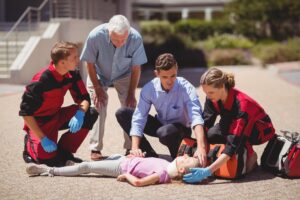
Security guards are usually the first responders during accidents or medical emergencies on site. Whether working in a shopping centre, office building, event, or school, emergencies can happen anytime. Many employers now expect guards to complete First Aid Training as part of their job requirements.
Knowing basic first aid helps you:
1. Provide immediate help before professional medical teams arrive
When an emergency happens, every second counts. Basic first aid allows you to stabilise a person while waiting for paramedics.
2. Reduce the severity of injuries or health problems
Early care reduces damage from bleeding, burns, choking, etc.
3. Keep people calm and reassured during emergencies
Your confidence helps control the situation.
4. Follow safety laws and workplace requirements
Many employers legally require first aid certifications, which you can gain through accredited first aid courses in Sydney.
5. Increase your confidence in handling emergency situations
Training helps you feel prepared rather than panicking.
Because of these reasons, first aid is becoming a standard part of many security roles.
Basic First Aid Skills Every Security Guard Should Master
As a security guard, you may be the first responder during emergencies. These basic skills help prevent conditions from worsening and support medical teams when they arrive.
1. Assess the Situation Safely
Check surroundings for danger before offering help. If unsafe, call professional help immediately.
2. Call Emergency Services Immediately
If someone is seriously injured, call triple zero (000) right away and follow the operator’s instructions.
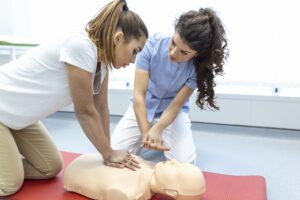
3. Learn CPR (Cardiopulmonary Resuscitation)
CPR is life-saving. To stay competent, security guards should refresh skills regularly through accredited courses like CPR Training Sydney.
4. Stop Bleeding
Apply pressure with a clean cloth or bandage. Raise the limb if possible.
5. Treat Minor Cuts and Scrapes
Wash hands, clean the wound, apply antiseptic, and cover with a sterile dressing.
6. Manage Burns
Cool burns under running water for 10 minutes. Never use ice. Cover with a clean, non-stick dressing.
7. Handle Choking
If the person cannot breathe or speak, perform abdominal thrusts (Heimlich manoeuvre). Call emergency services if they become unconscious.
8. Deal with Fractures and Sprains
Support the injured limb and avoid unnecessary movement. Apply a cold pack to reduce swelling.
9. Recognise Signs of Stroke and Heart Attack
Understanding life-threatening symptoms is crucial. Fast recognition saves lives.
10. Stay Calm and Reassure the Injured Person
Your calmness helps reduce panic and keeps the situation under control.
Why Enrol in a First Aid Course?
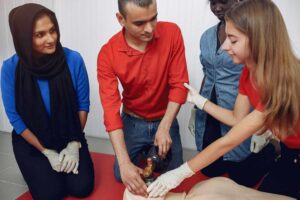
Knowing first aid from videos is not enough. Hands-on practice builds real confidence. Enrolling in a professional course ensures you meet safety requirements—especially if you’re completing the Security Guard Course and preparing for real security work.
Benefits of enrolling include:
- Hands-on practice
- Better understanding of legal responsibilities
- Workplace safety compliance
- Nationally recognised certification
Learn more and enrol in a certified program through Multisec Training First Aid Courses.
Tips for Security Guards When Providing First Aid
1. Always protect yourself first
Wear gloves, avoid contact with blood.
2. Get consent before providing help
Respect their permission if conscious.
3. Do not move a person unless danger is present
Only move in life-threatening situations.
4. Keep the injured person warm and comfortable
Use jackets, blankets, etc.
5. Record details of the incident
This helps with workplace reporting and legal documentation.
6. Know your limits
Do not attempt advanced treatments. Call emergency services instead.
Final Thoughts
First aid knowledge empowers security guards to deliver immediate and potentially life-saving help. Emergencies can happen anywhere, so being prepared is essential.
If you haven’t already, consider completing a recognised course. You can start with the First Aid Training Sydney program offered by Multisec Training.
And if you’re working toward becoming a licensed officer, pairing your training with the Security Licence Course NSW helps you meet all requirements for the security industry.
Remember, first aid is simple, practical, and one of the most valuable skills for any security guard.