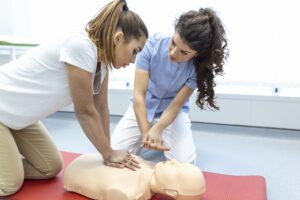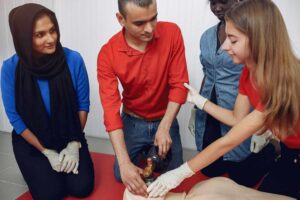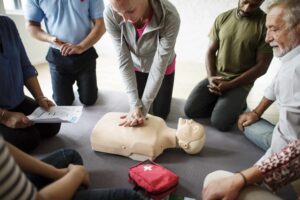
For those involved in training, safety, and operational excellence like the students and partners of Multisec Training preparedness is paramount. A first aid emergency is not a moment for guesswork; it requires immediate, systematic action. This principle starts with the equipment you keep on hand.
A well-assembled first aid kit checklist is more than just a regulatory requirement; it’s an evidence-based tool for casualty management. Moving beyond the minimal contents, here is a rational breakdown of what every professional-grade kit should contain, categorized by function.
Table of Contents
ToggleI. Trauma & Wound Management: The Imperative to Stop Bleeding
The primary goal of the core components is to control bleeding and protect the injury from infection. All dressings must be sterile and clearly sealed.
The bulk of your kit must contain items for effective wound care: Assorted Adhesive Dressings (Band-Aids) are needed for minor cuts, while Sterile Gauze Swabs (various sizes like 7.5cm and 10cm) are used for cleaning and initial cushioning. Include Non-Adherent Dressings for covering burns or larger, weeping wounds to prevent painful sticking, along with minor Wound Closures for bringing the edges of clean lacerations together. For serious incidents, ensure you have large Trauma Pads designed to be applied with pressure to control severe haemorrhage.
II. Immobilisation and Support: Compression and Fracture Care
These supplies are used to stabilise joints, apply pressure, and immobilise limbs to prevent further harm.
You must include multiple sizes of Crepe or Conforming Bandages (5cm, 7.5cm, 10cm) for securing dressings and providing light support to sprains. The versatile Triangular Bandage is crucial, as it can be used as a sling for arm injuries or folded to provide focused support. For serious strains, keep a Heavy Elastic/Compression Bandage on hand to quickly apply pressure and reduce swelling.
III. Instruments and Safety: Barrier Protection and Assessment
The tools within the kit enable the responder to operate safely and effectively. Personal Protective Equipment (PPE) is non-negotiable.
Disposable Nitrile Gloves (Non-Latex) are the most important barrier to prevent cross-contamination. You must also include a Resuscitation Mask or Face Shield for providing rescue breaths during CPR. The tool section requires sharp, Heavy-Duty Scissors (Shears) for cutting clothing away from a wound, Fine-Point Tweezers for debris removal, and Safety Pins for securing bandages. For wound cleaning, use Antiseptic Wipes/Pods and small, single-use vials of sterile Saline Solution for gentle flushing. Finally, include Instant Cold Packs that can be chemically activated for immediate cold therapy to reduce swelling.
IV. The Distinction: First Aid Kit vs. Medicine Kit for Home
A common mistake is merging acute trauma supplies with medication management. While essential, the medicine kit for home serves a different, non-emergency purpose managing common illnesses and discomforts, not life-threatening injuries.
The First Aid Kit is highly visible, accessible, and solely focused on immediate trauma response using sterile dressings, gloves, and bandages. Conversely, the medicine kit for home is designed for symptom management. It should contain things like Paracetamol and Ibuprofen for pain relief, Antihistamines for allergies, Antacids for indigestion, and potentially Oral Rehydration Salts for fluid loss.
The key is separation: the Home Medicine Kit needs to be stored securely, out of reach of children, and focuses on medications. The First Aid Kit must be lean, organized, and focused on tools and supplies for physical emergencies.
V. Maintenance: A Rational Approach to Safety
The most capable first aider can be undermined by an expired kit. A rational safety policy mandates routine inspection: check expiry dates on all sterile items every three to six months, immediately replenish any item used, and ensure the entire kit is always in a consistent, easily identifiable location. By adhering to this systematic first aid kit checklist and understanding the functional separation from your medicine kit for home, you are truly prepared.
Final Steps
Ultimately, the best first aid kit checklist is only as effective as the hands that use it. A rational, professional approach to safety, as championed by institutions like Multisec Training, recognizes that training is the single most vital component of preparedness.
The presence of a well-stocked kit, clearly distinguished from a standard medicine kit for home, signals an organization’s commitment to safety standards. By routinely inspecting supplies for expiry, immediately replacing used items, and ensuring the kit remains visible and accessible, you uphold this commitment.
Invest in quality supplies, but more importantly, invest in quality training. Only through the expert knowledge and practice gained through programs like those offered at Multisec Training can you transform a simple box of materials into a reliable, life-saving resource when moments count.